
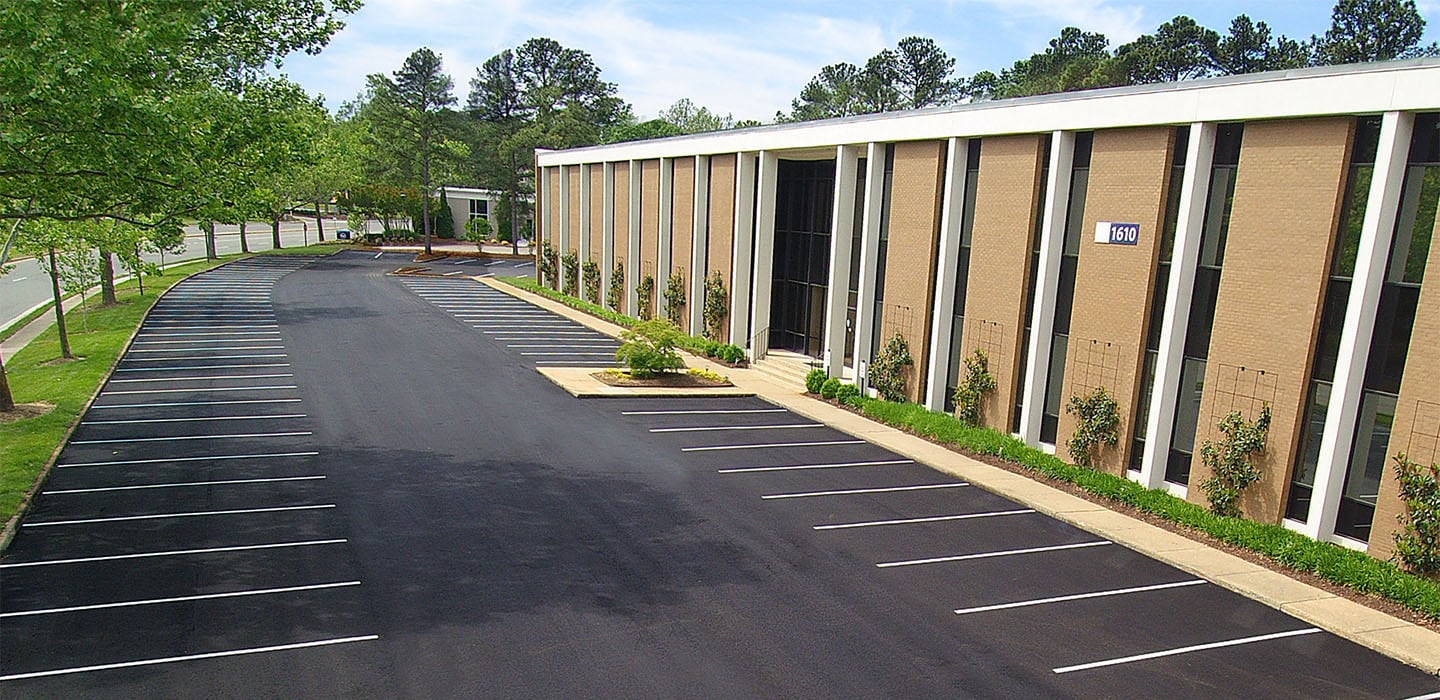
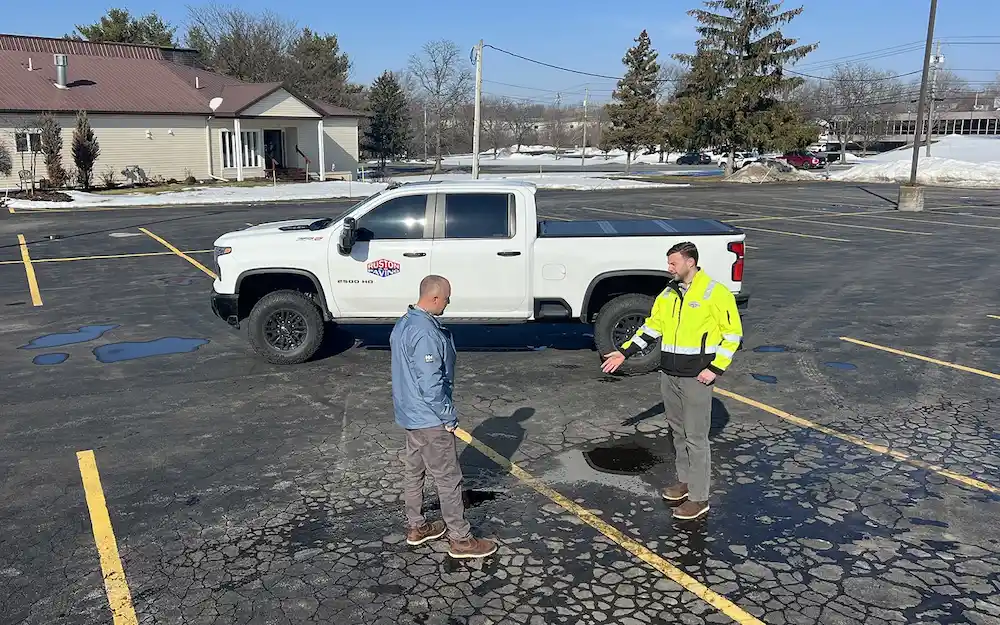
For a commercial property, the parking lot is more than a place for customers and employees to park. It is one of the first things people notice when they arrive. Cracked pavement, potholes, standing water, and deteriorating surfaces can make an otherwise well-maintained property look neglected—while also creating safety and liability concerns.
That leaves many facility managers and property owners facing the same question: Should we repair the parking lot, or is it time to replace it?
The answer is not always as simple as looking at how cracked or worn the asphalt appears. The most important question is what is happening underneath the surface. A lot with minor surface deterioration may have many useful years left with the right repairs and maintenance. A lot with widespread structural failure, on the other hand, may continue deteriorating no matter how many patches are applied.
Understanding the difference between parking lot repair vs replacement can help you avoid spending money on short-term fixes when what you really need is a more comprehensive solution.
Table of Contents
Repair or Replace? The Question Every Facility Manager Faces
Commercial parking lots take a tremendous amount of abuse. Daily traffic, delivery trucks, changing weather, water, deicing materials, and years of repeated loading can all contribute to pavement deterioration. Eventually, even a well-designed and maintained lot will need more than routine maintenance.
The good news is that deterioration does not automatically mean the entire parking lot needs to be removed. Depending on the condition of the pavement and the underlying base, a contractor may be able to extend the life of the existing lot through targeted repairs, milling and overlay, or resurfacing.
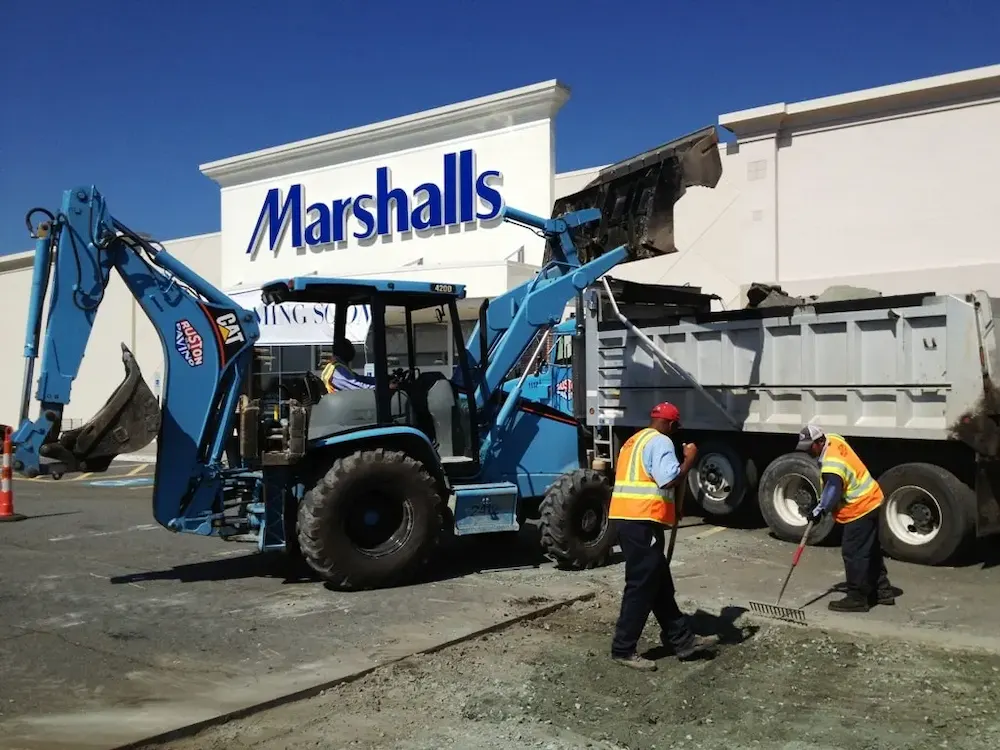
Replacement is a different proposition. Instead of addressing only the pavement surface, full-depth replacement involves removing failed pavement and rebuilding the affected areas, including the underlying base when necessary.
The key is determining why the lot is failing. If the problem is primarily on the surface, repair may be the most economical choice. If the pavement is failing because the underlying structure, drainage, or subgrade has deteriorated, replacement may provide better long-term value.
What "Repair" Actually Covers
When people hear "parking lot repair," they sometimes picture a few potholes being filled. In commercial paving, however, repair can refer to several different levels of work. The right solution depends on the extent and type of deterioration.
What "Replacement" Actually Means
Full replacement is a much more comprehensive project than repairing the pavement surface. When a parking lot has reached the point of structural failure, replacement typically involves removing the existing pavement and rebuilding the affected areas.
Full-Depth Removal and Replacement
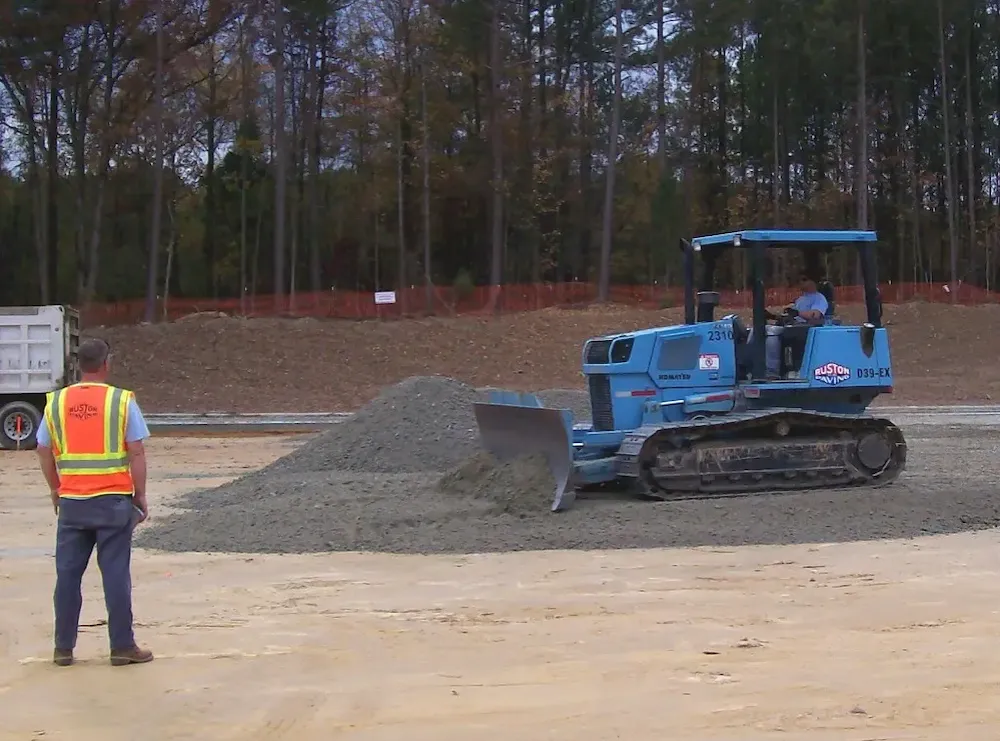
A full-depth replacement removes failed asphalt and addresses the layers beneath it. Depending on site conditions, that may include repairing or rebuilding portions of the aggregate base and addressing problems with the subgrade before new asphalt is installed.
The goal is to create a stable pavement structure from the ground up rather than repeatedly treating symptoms at the surface.
This can require more planning and investment than patching or resurfacing, but it also gives the property owner an opportunity to correct problems that have been contributing to pavement failure for years.
Why Replacement Is About the Base, Not Just the Surface
The most important distinction in the parking lot repair vs replacement decision is often what is happening beneath the asphalt.
Asphalt pavement functions as a system. The surface distributes vehicle loads, while the base and subgrade provide the structural support underneath. If those underlying layers have become unstable, saturated, poorly compacted, or otherwise compromised, putting a new surface on top will not necessarily solve the problem.
This is why widespread alligator, or fatigue, cracking is such an important warning sign. Alligator cracking typically indicates that the pavement structure is no longer adequately supporting repeated traffic loads. Installing a new surface over a failed base can simply result in the same cracking returning.
When Patching Is Just Throwing Good Money After Bad
Repeated repairs can make sense when they are preventing relatively small problems from becoming larger ones. But there is a point when patching becomes a cycle rather than a solution.
If the same potholes keep coming back, large sections of pavement require patching, or new cracks appear shortly after repairs, it may be time to stop treating individual symptoms and evaluate the entire pavement structure.
A useful rule of thumb is that when repairs are approaching roughly 25% to 30% of the parking lot area, full replacement may begin to make more financial sense. This is not a hard threshold—site conditions, traffic, pavement structure, and the type of deterioration all matter—but it can be a helpful starting point for capital planning.
6 Signs Your Lot Has Crossed the Line to Replacement
There is no single number of cracks or potholes that automatically means a parking lot needs to be replaced. However, several warning signs suggest that surface-level repairs may no longer be the best long-term strategy.
The Cost Math: Short-Term Fix vs. Long-Term Value
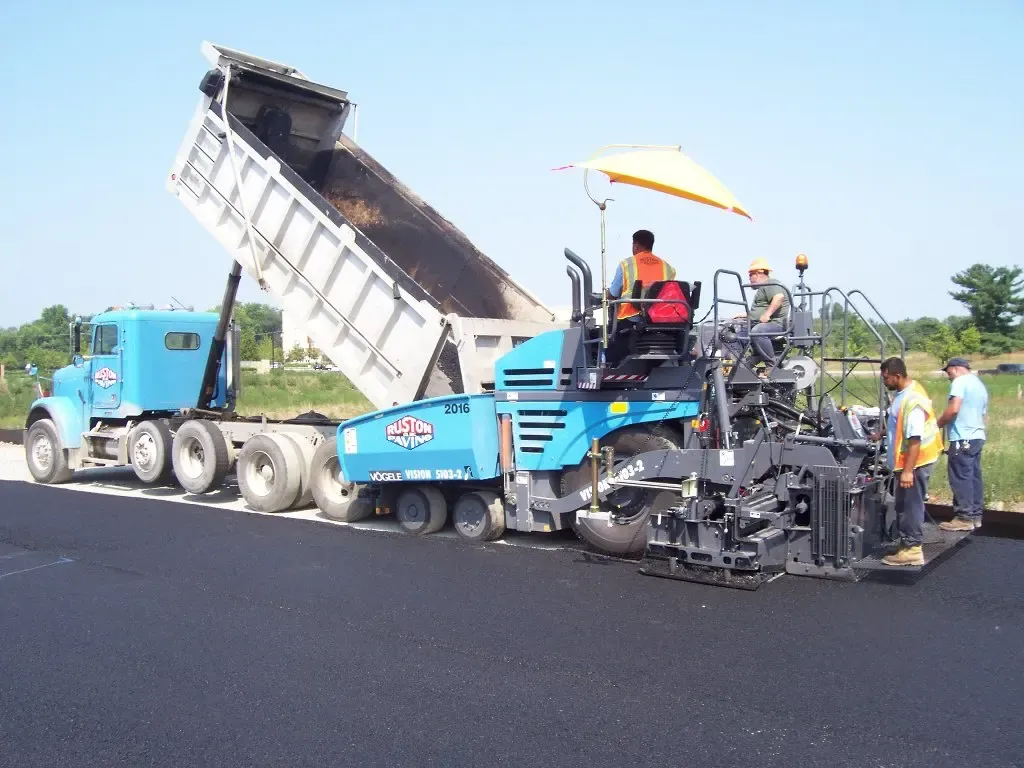
One of the biggest reasons property owners hesitate to replace a parking lot is the upfront cost. Repairing a few problem areas will almost always cost less immediately than removing and rebuilding an entire lot.
But comparing the two options based solely on the initial price doesn’t always get you to the right answer.
A better way to evaluate the decision is to consider cost per year of useful service. A repair may require less money today but provide only a few additional years of reliable performance. A properly constructed replacement, by contrast, may provide approximately 15 to 25 years of service depending on site conditions, design, traffic, maintenance, and other factors.
Imagine a property spends money every year patching potholes and repairing failed sections. Five years of recurring repairs can add up quickly—especially if each repair addresses a symptom rather than the structural problem causing the deterioration.
That does not mean every aging lot should be replaced immediately. It means facility managers should look at the total lifecycle cost, not simply the cost of the next repair.
Deferred maintenance can also make the eventual replacement more complicated. Water infiltration and continued structural failure can cause damage to the base and subgrade, potentially expanding the scope of future work.
Factors Beyond the Pavement Itself
The condition of the asphalt is only one part of the decision. A commercial parking lot exists within a larger site, and a successful paving project needs to account for drainage, accessibility, traffic patterns, and how the property operates during construction.
Drainage and Grading
A parking lot can have excellent asphalt and still experience premature failure if water does not drain properly.
During a replacement project, the contractor has an opportunity to address grading, slopes, drainage structures, and other site conditions contributing to water accumulation. This is one reason replacement can sometimes provide value that a surface repair simply cannot.
Paving Design and planning can help ensure these considerations are treated as part of the project, not as an afterthought.
Climate and soil conditions can also influence pavement performance. Freeze-thaw cycles can contribute to pavement and base deterioration in colder regions, while expansive or heavy clay subgrades can create challenges in areas such as North Carolina and Virginia. In either case, the important question is what is happening beneath the asphalt.
ADA Compliance and Re-Striping
Major parking lot work can also create an opportunity to address pavement markings, parking spaces, accessible routes, and other site considerations.
When a commercial property undergoes significant paving work, property owners should discuss applicable accessibility and striping requirements with their paving and design professionals.
Business Disruption and Phasing
A parking lot replacement can affect customers, employees, tenants, deliveries, and daily operations. For many commercial properties, keeping the business accessible during construction is just as important as the paving itself.
Depending on the property, a project may be phased so portions of the lot remain available while other areas are being worked on. Planning traffic flow and construction sequencing in advance can help minimize disruption.
How a Professional Assessment Settles the Debate
Trying to decide between repair and replacement by looking at the surface alone isn’t always helpful.
A professional paving contractor can evaluate the type, severity, and distribution of pavement deterioration and investigate the conditions beneath the asphalt. Depending on the project, that may include core sampling and evaluation of the pavement structure and base.
This is particularly important when the lot has alligator cracking, recurring potholes, widespread settlement, drainage problems, or extensive areas of deterioration. Two parking lots can look similarly worn from the surface while requiring completely different solutions underneath.
The right question is not simply, "How bad does the asphalt look?" It is, "Why is the asphalt failing, and how much useful life can the existing pavement structure realistically provide?"
Ruston's team can help property owners and facility managers make that determination and develop an approach based on the actual condition of the parking lot.
For more information about available solutions, explore Ruston's Parking Lot Repair and Replacement services or learn more about commercial paving services.
Conclusion: Make It a Data Decision, Not a Guess
When you're weighing parking lot repair vs replacement, the cheapest immediate option is not necessarily the most cost-effective one.
Localized cracks, potholes, and surface deterioration may be manageable with repairs or resurfacing, as long as the underlying base remains strong. But widespread alligator cracking, recurring failures, drainage problems, extensive repair areas, and an aging pavement structure can all be signs that replacement is the better long-term investment.
The biggest factor is what you cannot see from the surface: the condition of the pavement structure and base underneath it.
Rather than guessing, it’s best to have the lot professionally evaluated. Ruston Paving’s team can assess the condition of your commercial parking lot and help you determine whether repair, resurfacing, or full replacement makes the most sense for the property.
Schedule an assessment with Ruston Paving and make your next paving decision based on the condition of the lot, not just the appearance of the asphalt.