
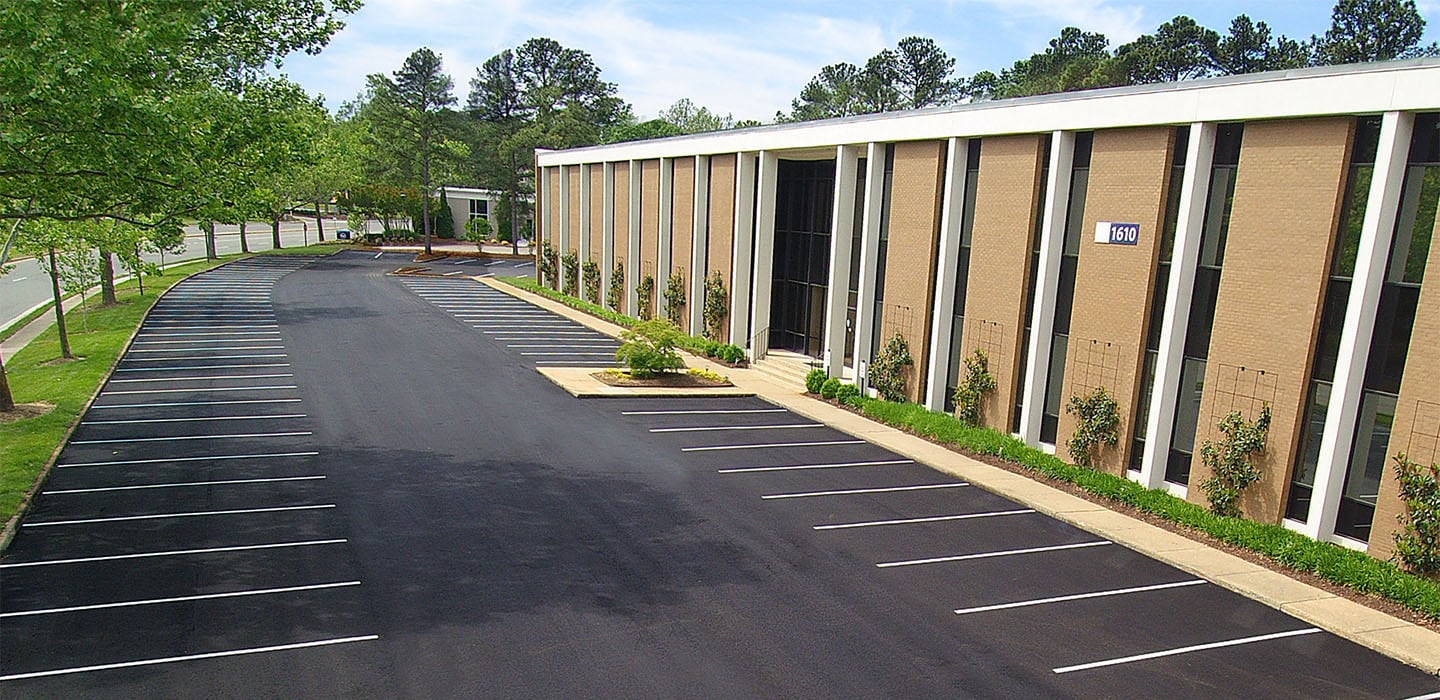
When pavement starts cracking, rutting, settling, or breaking apart, it is easy to focus on the damage you can see. But when the underlying base has failed, surface-level repairs are rarely enough. Milling off damaged asphalt and installing a new surface may improve the appearance, but it will not correct a structural problem beneath the pavement.
For commercial parking lots, industrial facilities, municipal roads, and other large paved areas, a failed base often means the pavement needs to be rebuilt. Traditionally, that has meant removing the existing pavement, hauling it away, bringing in new aggregate, and rebuilding from the ground up.
Full-depth reclamation offers another option. Ruston Paving’s full-depth reclamation services reuse the existing asphalt and base materials in place to create a new stabilized foundation. When site conditions are right, FDR can reduce excavation, hauling, material disposal, and the amount of new aggregate needed for reconstruction.
Table of Contents
What Is Full-Depth Reclamation?
Full-depth reclamation, or FDR, is an in-place pavement reconstruction process designed to address failure that extends below the asphalt surface.
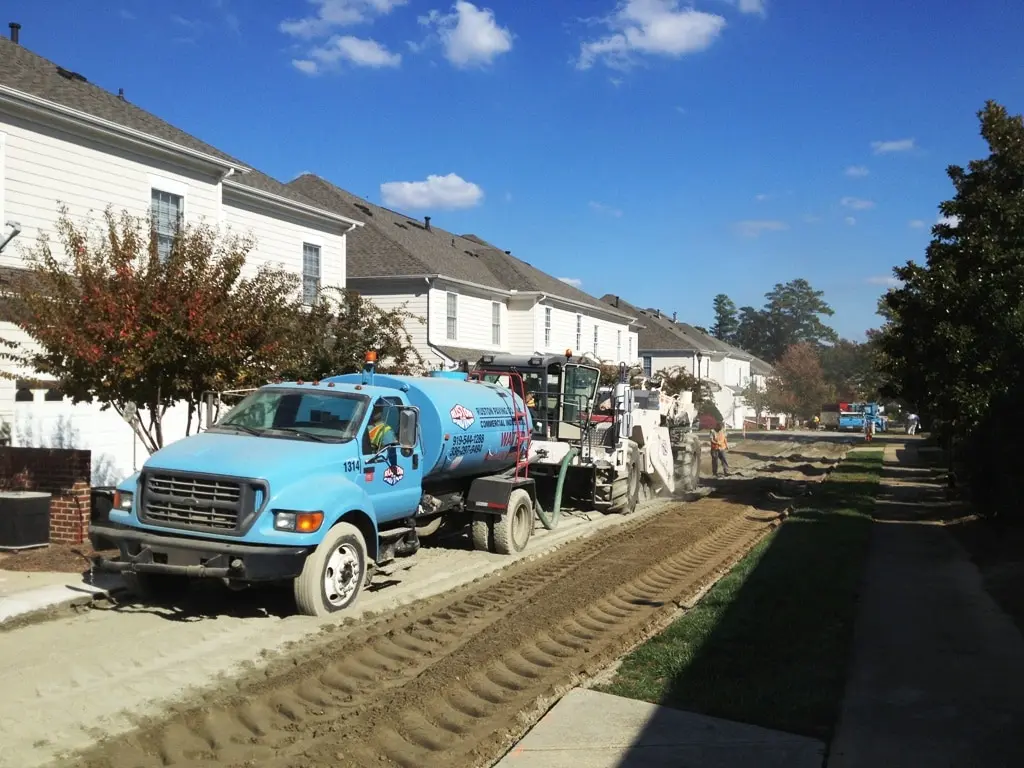
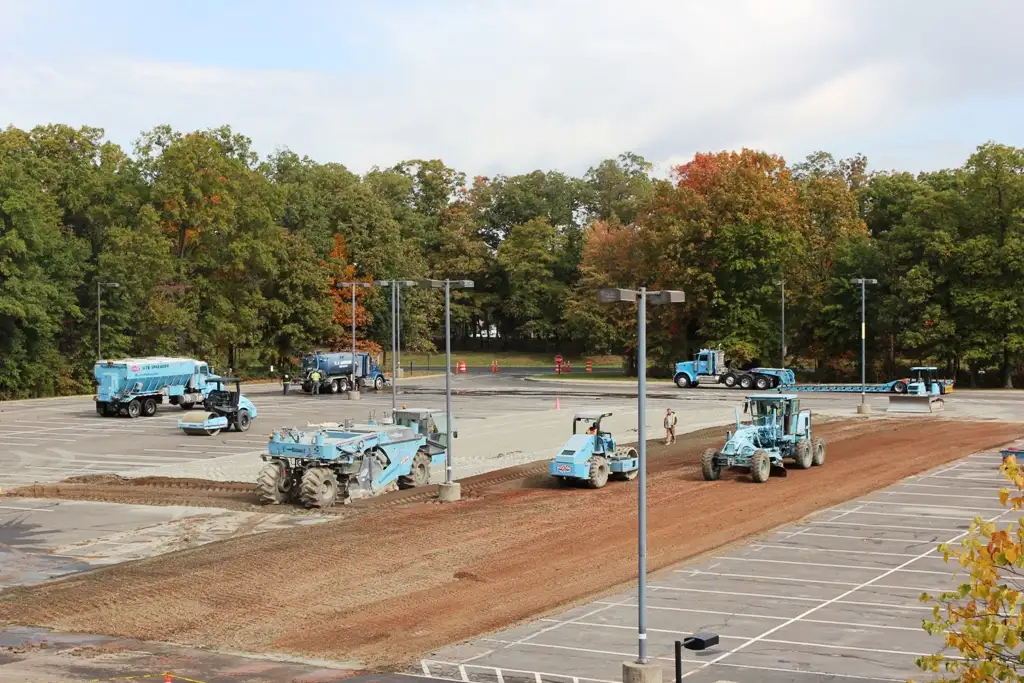
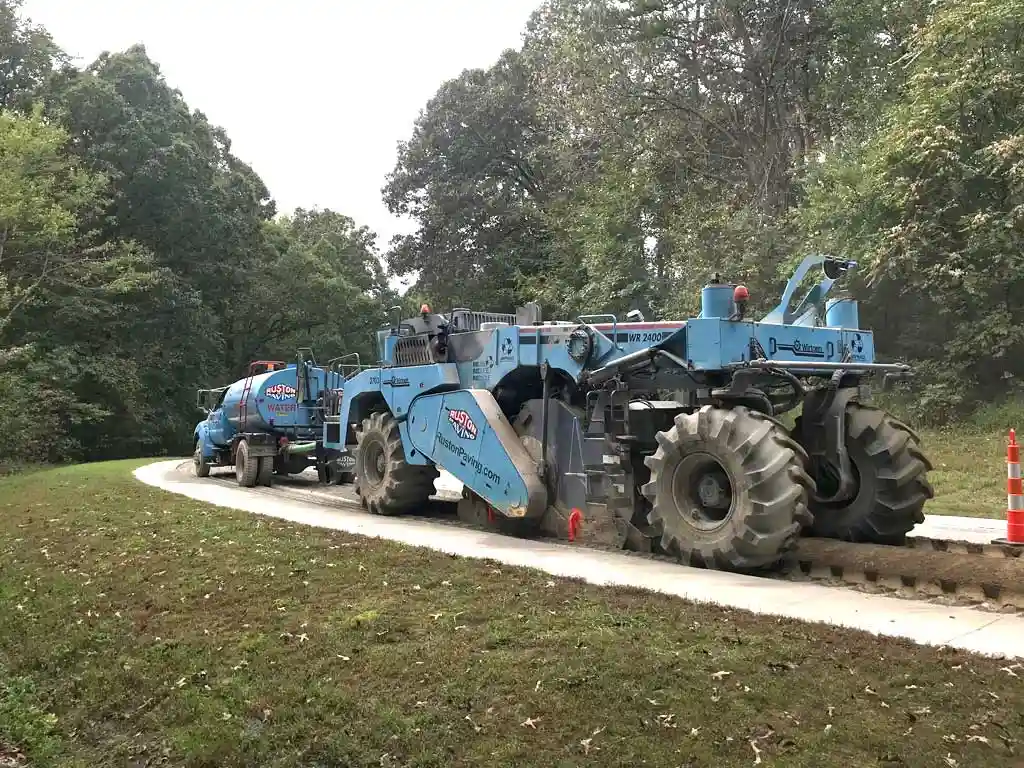
Specialized equipment pulverizes the existing asphalt along with a portion of the underlying base. The reclaimed material is then blended with a stabilizing additive, graded, and compacted to create a new base layer. Once that foundation has been prepared, a new asphalt surface can be installed over it.
This is an important distinction from asphalt milling. Milling removes deteriorated asphalt from the surface before resurfacing. Full-depth reclamation goes deeper by addressing the pavement structure and base beneath it.
Depending on the project, stabilizing additives may include Portland cement, lime, asphalt emulsion, or other materials. The right approach depends on the existing pavement, soil conditions, moisture levels, and structural requirements.
1. Enhancing the Foundation: A Sturdier Base
One of the biggest advantages of full-depth reclamation is its ability to address structural problems within the pavement foundation.
Traditional reconstruction often requires removing the existing asphalt and base materials before rebuilding with new aggregate. FDR instead processes much of that existing material in place and incorporates it into a new stabilized base.
For projects using Portland cement stabilization, cement is blended with the reclaimed pavement and base material to help create a stronger, more uniform foundation. Other projects may call for a different stabilizing additive based on the existing materials and soil conditions.
In situations where excess moisture is present before stabilization begins, job site drying may be used to improve conditions before treatment.
After stabilization, the reclaimed material is shaped and compacted before the new asphalt surface is installed. The goal is to correct the structural problem beneath the pavement rather than repeatedly treating damage at the surface.
A properly stabilized base can also provide a stronger foundation for pavement exposed to heavy traffic loads and changing weather conditions. By addressing the pavement structure itself, FDR can help reduce the need for repeated repairs and maintenance over the life of the pavement.
2. Economical Efficiency: Minimizing Material Transport
Conventional remove-and-replace reconstruction can involve a significant amount of material movement.
Failed pavement and base materials must be excavated and hauled away for processing, recycling, or disposal. New aggregate then has to be delivered to the project, placed, graded, and compacted before new asphalt is installed.
Full-depth reclamation reduces that back-and-forth by reusing material that is already on the property.
Instead of paying to transport large quantities of failed pavement away and then bring replacement aggregate back, the existing asphalt and base become part of the rebuilt pavement structure.
The exact cost difference varies from project to project. Pavement depth, stabilization requirements, site access, project specifications, disposal expenses, and local material costs all play a role. Still, reducing hauling and imported material can make a meaningful difference on larger reconstruction projects.
Fewer material-hauling trips can also reduce fuel use and the amount of construction traffic moving across surrounding roads and infrastructure. On larger projects, those transportation reductions can contribute to both project savings and simpler site logistics.
3. Sustainability Focus: Repurposing for Environmental Gains
Material reuse is another major advantage of full-depth reclamation.
Because FDR processes the existing pavement and base in place, less material needs to be removed from the property and less new aggregate needs to be brought in.
That can mean fewer truck miles, reduced demand for virgin aggregate, and less material sent to landfills or other disposal facilities.
For businesses, municipalities, and organizations with sustainability goals, in-place reclamation can provide a way to rebuild structurally failed pavement while making better use of the materials already on site. Reusing those materials can also reduce some of the energy use and greenhouse gas emissions associated with producing, transporting, and replacing pavement materials.
4. Minimal Disruptions and Downtime
Pavement reconstruction can affect customers, employees, tenants, deliveries, production, and normal traffic flow.
Traditional remove-and-replace work may involve excavation, trucking, disposal, aggregate deliveries, grading, compaction, and paving. Coordinating each of those steps can add complexity to the construction schedule.
FDR keeps much more of the material processing on site. Because the existing pavement and base are reclaimed in place, there is generally less truck traffic and less time spent moving material on and off the property.
For commercial properties, that can mean less inconvenience for customers and staff and fewer interruptions to normal business operations.
Full-Depth Reclamation vs. Remove and Replace: How Do They Compare?
When considering full-depth reclamation vs. remove and replace, the biggest difference is what happens to the material already on the site. With traditional reconstruction, the existing material is removed and replaced with new material; with FDR, the existing pavement and base become part of the new pavement structure.
That fundamental difference can affect cost, scheduling, environmental impact, and logistics.
Cost: Less Material to Move
FDR can reduce project costs by minimizing the amount of material that needs to be excavated, hauled away, disposed of, and replaced.
Instead of paying to transport large quantities of existing pavement away and then paying to bring new aggregate back, the project reuses the material already present.
The exact cost savings will vary from project to project. Site conditions, pavement depth, stabilization requirements, accessibility, project specifications, and local material costs all play a role, but reducing hauling and imported aggregate can make a meaningful difference on large reconstruction projects.
Timeline: Less Hauling and Handling
Time is another major consideration for commercial and municipal projects.
Remove-and-replace reconstruction can require extensive excavation, trucking, disposal, aggregate deliveries, placement, and compaction. Coordinating all of those activities can add complexity to the construction schedule.
FDR keeps much of the process on site. Because the existing pavement and base are processed in place, there is generally less truck traffic and less time spent moving material on and off the property.
For facilities where pavement closures interfere with employees, customers, deliveries, production, or traffic flow, reducing construction disruption can be especially valuable.
Sustainability: Reuse What You Already Have
One of the most significant advantages of FDR is material reuse. Instead of sending the existing pavement structure away and importing new aggregate, 100% of the existing material can be reused in place as part of the reclamation process.
That can mean fewer truck miles, reduced demand for virgin aggregate, and less material sent to landfills or other disposal facilities.
For organizations with sustainability objectives or projects where minimizing construction-related environmental impacts is important, in-place recycling can be a fantastic alternative.
Structural Performance: Rebuilding the Base
The goal of FDR is not simply to make old pavement look new, it’s to create a stabilized base capable of supporting a new pavement surface. By pulverizing and blending the existing pavement and base and treating that material with an appropriate stabilizing additive, contractors can create a more uniform, engineered base layer.
When properly designed and constructed, this approach can provide the structural foundation needed for a new pavement system.
When Is Full-Depth Reclamation the Right Choice?
Full-depth reclamation can be a strong option when pavement failure extends beyond the surface and into the underlying base. Rather than treating isolated cracks or potholes, FDR is designed for larger-scale structural problems where the existing pavement materials can be reclaimed and stabilized.
FDR may be worth considering for projects such as:
Commercial roads and parking lots Large paved areas where widespread structural failure has made patching or resurfacing impractical.
Industrial facilities Heavy-use pavement that needs a stronger foundation to handle ongoing traffic and loading.
Municipal roadways Roads where reducing construction time and truck traffic can help minimize disruption to the surrounding community.
Projects with difficult hauling conditions Sites with limited access, expensive disposal requirements, or heavy traffic may benefit from keeping more of the construction process on site.
Projects where material reuse is a priority FDR allows the existing pavement and base materials to be reused rather than hauled away and replaced with new aggregate.
The size and condition of the pavement are important considerations, but they aren't the only ones. Soil conditions, drainage, existing pavement depth, traffic requirements, and project specifications can all affect whether FDR is appropriate.
That's why FDR isn't a one-size-fits-all solution. A qualified paving contractor should evaluate the existing pavement and underlying materials before determining whether full-depth reclamation is a good fit for the project.
When Does Remove and Replace Still Make Sense?
While FDR can offer significant advantages, traditional remove-and-replace reconstruction still has an important place in commercial and municipal paving. Some sites simply aren't good candidates for in-place reclamation.
Remove and replace may make more sense when:
The project requires major grade changes If the elevation or slope of the pavement needs to change significantly, excavation may be necessary to achieve the desired grade.
Underground utilities are in the way Existing utility lines or other buried infrastructure can make in-place reclamation impractical in certain areas.
Materials are contaminated Contaminated pavement or soil may need to be excavated and properly removed rather than incorporated into a reclaimed base.
The area is very small FDR is generally more beneficial on larger pavement areas where there is enough material to reclaim and stabilize efficiently.
The site has significant obstructions Tight spaces or physical obstacles can limit the ability to use FDR equipment effectively.
Project specifications require another approach Certain engineering plans, contracts, or site requirements may call for traditional excavation and replacement.
The goal isn't to choose FDR simply because it is a newer or more efficient reconstruction method. It's about choosing the method that fits the pavement, soil, site, and project requirements.
How Ruston Evaluates a Site for Full-Depth Reclamation
Successful FDR starts well before reclamation equipment reaches the pavement. Before recommending full-depth reclamation, Ruston's team evaluates the existing pavement and the conditions beneath it to determine whether the process is a good fit.
That evaluation can include:
Testing the existing base and subgrade Understanding what's happening beneath the pavement helps determine whether the existing materials can be reclaimed and stabilized effectively.
Evaluating the existing materials The composition and condition of the asphalt, aggregate, and underlying soil can all affect how an FDR project should be designed.
Determining the right stabilizing additive Cement, lime, asphalt emulsion, and other stabilization approaches can perform differently depending on the material being treated and the structural requirements of the finished pavement.
Considering local soil conditions This is particularly important in areas with challenging subgrade conditions, including the heavy clay soils found throughout parts of North Carolina and Virginia.
Developing the right approach for the site The goal is to create a stabilized base that is designed around the actual pavement and soil conditions—not simply apply the same treatment to every project.
Ruston's broader asphalt recycling services bring together pavement recycling, reclamation, and soil stabilization capabilities, allowing the team to develop an approach based on the actual conditions at the site.
Full-Depth Reclamation FAQs
How long does full-depth reclamation last?
The service life of an FDR pavement depends on factors such as the existing materials, stabilization method, pavement design, drainage, traffic loading, construction quality, and ongoing maintenance. Properly designed and constructed FDR projects can provide a durable structural base for a new asphalt pavement system.
The important point is that FDR is designed to address structural pavement failure rather than simply covering damaged asphalt with another surface layer.
Is full-depth reclamation cheaper than remove and replace?
FDR can be less expensive than traditional remove-and-replace reconstruction because it reduces the need for excavation, hauling, disposal, and imported aggregate.
However, costs vary based on site conditions and project requirements, so there is no universal percentage savings or guaranteed price difference.
A site evaluation is the best way to determine which reconstruction method makes financial sense for a particular project.
What types of projects are best suited for full-depth reclamation?
FDR is commonly considered for larger paved areas experiencing widespread structural failure, including commercial parking lots, industrial facilities, municipal roads, and other roadways.
It is generally more valuable when the pavement failure extends beyond the surface and when there is enough existing pavement and base material to make in-place reclamation practical.
Rebuild Smarter, Not Just Harder
When a pavement's problems extend all the way into the base, simply putting new asphalt on top isn't always the smartest way forward. Traditional remove-and-replace reconstruction can certainly solve structural problems, but it also requires significant excavation, trucking, disposal, and imported material.
By pulverizing the existing asphalt and a portion of the underlying base, stabilizing that material in place, and building a new pavement surface over the reclaimed base, FDR can provide a more efficient path to pavement reconstruction. It can reduce material and hauling costs, shorten construction schedules, limit truck traffic, keep existing materials out of the waste stream, and create a stronger foundation for the finished pavement.
The key is determining whether your pavement is a good candidate. When the site is a good fit, full-depth reclamation can support the long-term performance of the pavement while reducing some of the material, transportation, and disruption associated with traditional reconstruction.
If you are dealing with widespread pavement failure on a commercial, industrial, or municipal project, Ruston's team can evaluate the existing pavement, base, and subgrade and determine whether full-depth reclamation makes sense for the site. The right reconstruction strategy starts with understanding what is happening below the surface—and choosing a solution built around those conditions. Contact us today to get started.