
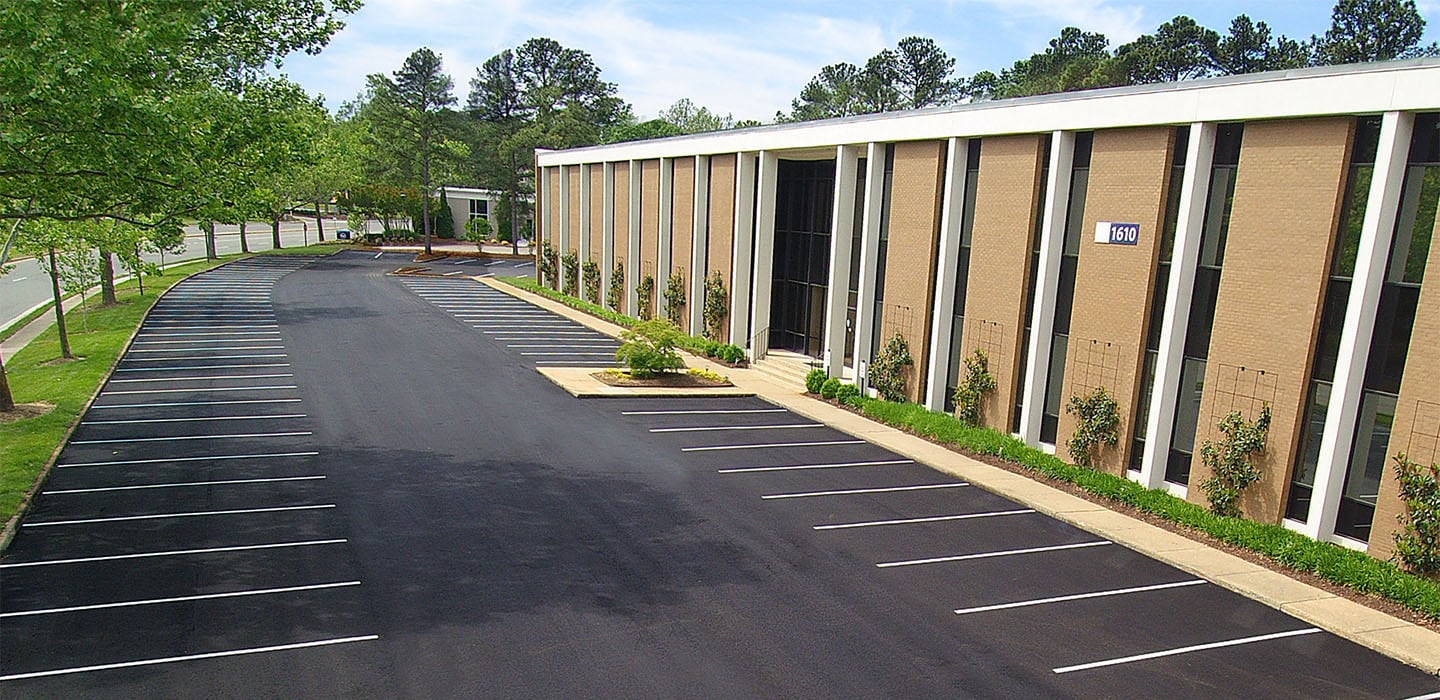
When it comes to paving a parking lot or other hard surface, most people focus on the appearance: smooth asphalt, crisp lines, and a clean finish. But what lies underneath is just as important—if not more. Subsurface drainage is one of the most overlooked aspects of pavement construction, and ignoring it can lead to costly repairs down the road.
Table of Contents
Why Subsurface Drainage Matters
Water is the number-one enemy of paved surfaces. When rainwater seeps beneath asphalt or concrete, it weakens the base layer, causes cracks to spread, and accelerates the formation of potholes. In colder months, freeze-thaw cycles worsen the damage even more. By installing a proper drainage system beneath the surface, you can keep water away from the foundation of your pavement—significantly extending its life.
How It Works
Subsurface drainage systems are designed to move water out and away from paved areas before it has a chance to cause problems. By using underground drainage systems to collect and redirect water from beneath the pavement, you prevent moisture buildup that can damage the foundation and cause structural problems like potholes and raveling. These drainage systems work by filtering water through gravel and a geotextile fabric and then by directing it to a catch basin or storm sewer to protect the pavement’s structural integrity.
-
- Identify the Problem Areas: Locations with persistent water pooling or depressions are signals of subsurface drainage issues.
-
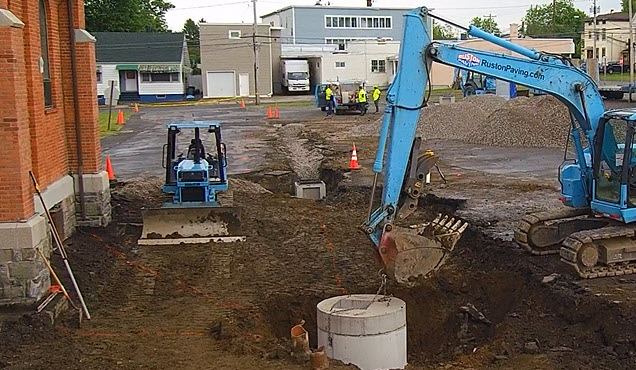
- Excavate: Trenches are dug below the parking lot’s surface where drainage is needed.
-
- Fill with Drainage Material: The trench is filled with a drainage layer, such as ¾-inch clean stone without fines.
-
- Lay Perforated Pipe: A perforated pipe is laid at the bottom of the trench to collect water.
-
- Use Filter Fabric: A geotextile filter fabric is used to separate the fine soil particles from the clean stone and pipe, preventing clogging.
-
- Collection and Discharge: The pipe collects water and channels it to a catch basin or a larger stormwater pipe.
-
- Backfilling: The trench is then backfilled with compacted stone, and then the final asphalt layer.
-
- Identify the Problem Areas: Locations with persistent water pooling or depressions are signals of subsurface drainage issues.
-
- Excavate: Trenches are dug below the parking lot’s surface where drainage is needed.
-
- Fill with Drainage Material: The trench is filled with a drainage layer, such as ¾-inch clean stone without fines.
-
- Lay Perforated Pipe: A perforated pipe is laid at the bottom of the trench to collect water.
-
- Use Filter Fabric: A geotextile filter fabric is used to separate the fine soil particles from the clean stone and pipe, preventing clogging.
-
- Collection and Discharge: The pipe collects water and channels it to a catch basin or a larger stormwater pipe.
-
- Backfilling: The trench is then backfilled with compacted stone, and then the final asphalt layer.
Key Components of a Subsurface Drainage System
The key components of a subsurface drainage system are:
- Outlets: A suitable point where the drainage water can be safely released.
- Main Drains: Larger pipes that receive water from the laterals and carry it to the outlet.
- Laterals (or Capture Lines): Smaller, perforated pipes laid in a pattern to collect water from the soil.
- Filter Material: A layer around the drains to prevent soil particles from clogging the system.

Materials that are used for subsurface drainage include:
-
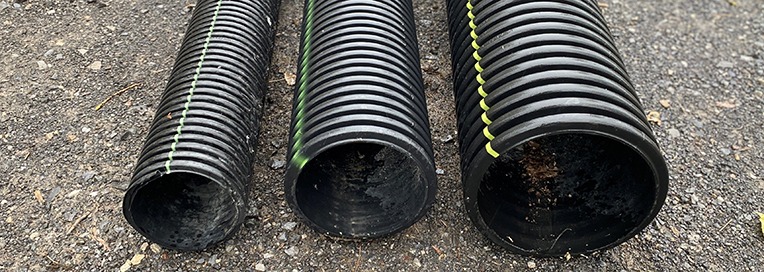
- Perforated Pipes (French drains): These are placed in the trench to collect water and carry it to the discharge point.
- Gravel/Stone: A layer of clean stone provides a porous medium for water to flow through.
- Geotextile (Filtering) Fabrics: This type of fabric prevents fine particles from entering and clogging the drainage system.
- Drainage Mats: Provide an additional layer of protection against water pooling.
- Catch Basins: These are underground structures with grates at the surface that collect and channel water into the drainage system.
Why It Is Important in Parking Lots
Subsurface drainage in a parking lot is important because it prevents water from pooling beneath the pavement, which can erode the base layers, cause voids, and lead to structural damage, cracking, and premature pavement failure. Parking lots endure constant vehicle traffic and heavy loads, which already place stress on the pavement. Add standing water to the equation, and cracks, potholes, and foundation issues can form quickly.
By removing water from the subgrade, subsurface drainage systems maintain the pavement’s structural integrity, prolong its lifespan, reduce maintenance costs, and ensure a safer, more stable surface for vehicles and pedestrians.
Subgrade includes the prepared, native soil surface or imported material layer that forms the foundation for a road, pavement, or other structure. The subgrade needs to be adequately compacted and stable to support the loads from the overlying pavement and withstand environmental conditions like moisture and frost without excessive deformation or volume change. In cases where excessive moisture is delaying preparation, job site drying can help restore workable conditions before paving begins.
Proper drainage helps:
- Prevent costly repairs and early replacement.
- Reduce water pooling and icy patches that could cause accidents.
- Maintain a smooth, safe surface for employees, customers, and visitors.
The Benefits of Subsurface Drainage
Investing in subsurface drainage offers long-term returns:
- Prevents Pavement Damage: By removing subsurface moisture, it prevents the weakening of the aggregate base and subgrade that leads to potholes and other structural issues.
- Lower Maintenance Costs: Fewer repairs and longer-lasting pavement.
- Enhanced Safety: Less risk of slips, falls, or vehicle damage.
- Curb Appeal: A clean, well-kept parking lot makes a strong first impression.
- Compliance: Many municipalities require proper water management to avoid runoff issues.
Signs You Might Need a Drainage Solution
You need subsurface drainage in a parking lot if you see standing water after rain, pavement deterioration (e.g., cracks, potholes), erosion, water flowing toward buildings, or if the subgrade appears to be shifting.
These are signs of poor drainage:
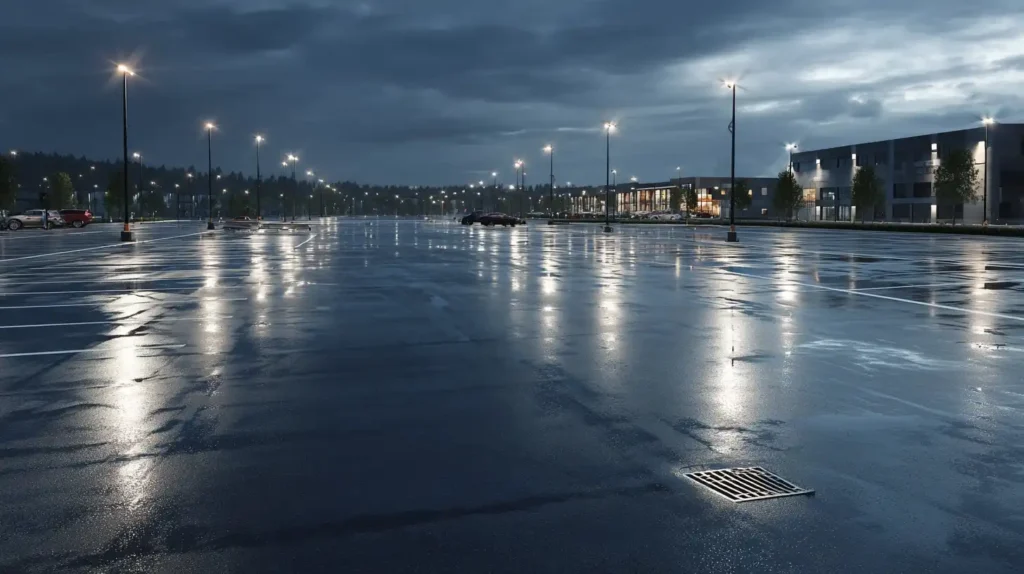
- Standing Water: Water that lingers after rain and stands in the same spots repeatedly after storms is a clear indicator of an issue.
- Cracks and Potholes: Water accumulation weakens the pavement and its base, leading to cracks, potholes, and structural damage.
- Pavement Erosion: When runoff isn’t properly managed, it can erode the soil and pavement around the lot.
- Water Flowing Toward Buildings: Water moving towards or into buildings indicates poor slope and drainage.
- Subgrade Settlement: The ground underneath the pavement can sink due to poor compaction, freeze-thaw cycles, or decomposition, which traps water.
- Safety Hazards: Standing water creates slippery conditions and can cause vehicles to slip, leading to potential liability.

Final Thoughts
Strong, long-lasting paved surfaces start with what you don’t see: a solid drainage system. By addressing water issues early with subsurface draining, you protect your investment, reduce future costs, and create a safer, more attractive space for everyone who visits your property.