
If you manage a commercial property or own a business, your pavement is one of the first things customers, tenants, and visitors notice. But it’s also one of the easiest things to overlook, especially during the winter months when snow and ice cover the surface.
By the time winter ends, your asphalt has likely taken a beating. The best time to take action isn’t mid-summer when problems are impossible to ignore, it’s right after the snow melts.
Table of Contents
Winter Takes a Serious Toll on Pavement
Winter conditions are tough on pavement, and the damage often happens beneath the surface before you ever see it.
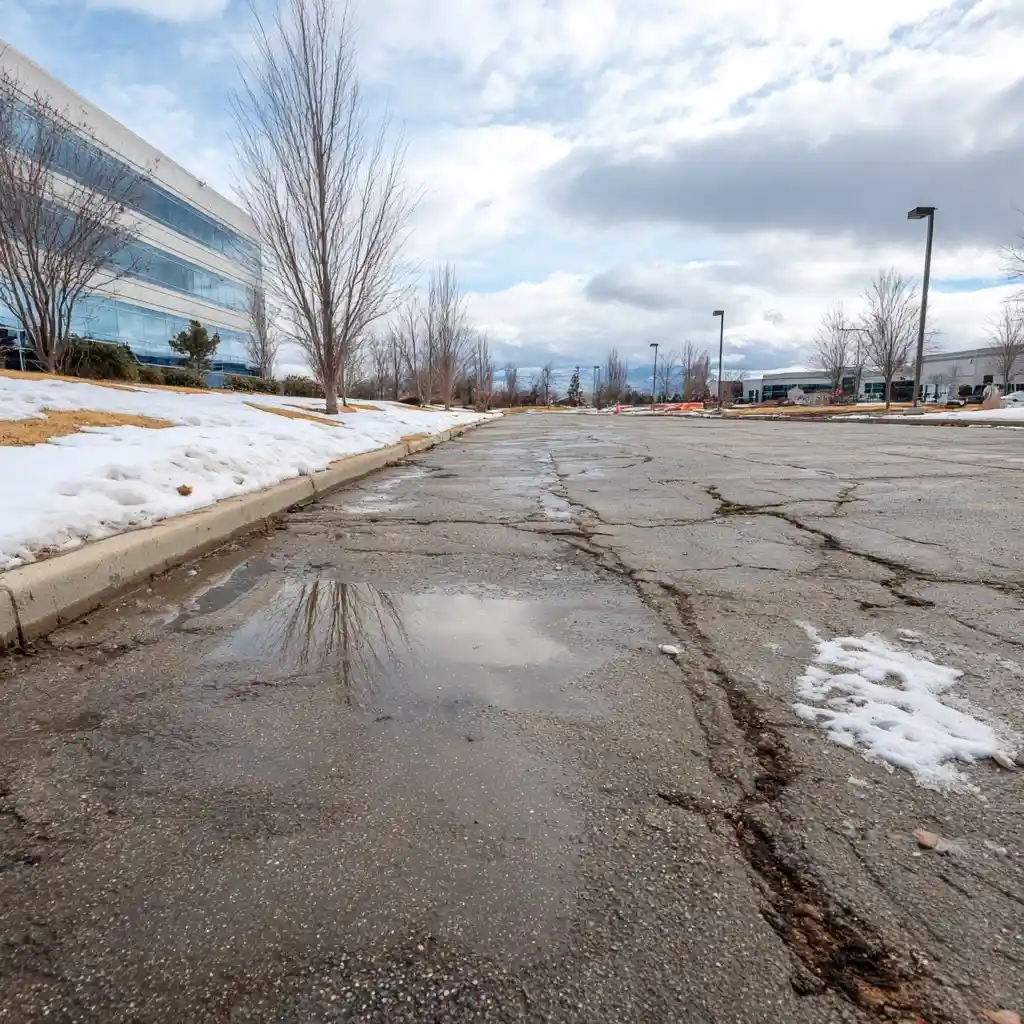
As temperatures fluctuate, water seeps into small cracks in your asphalt or concrete. When that water freezes, it expands, which means those cracks grow even larger. This freeze-thaw cycle repeats over and over throughout the season, gradually weakening the structure of your pavement.
On top of that, snowplows, heavy equipment, and increased traffic on brittle surfaces can cause additional stress. De-icing salts and chemicals, while necessary for safety, can accelerate surface breakdown and contribute to crumbling edges and surface deterioration.
By the time winter ends, what started as minor imperfections can quickly turn into potholes, deep cracks, and uneven surfaces.
The Post-Melt Window: Your Best Opportunity
Right after the snow melts, the true condition of your pavement is finally visible. This short window is the perfect time to assess the damage and take action before it gets worse.
New or Expanding Cracks
Cracks are often the first visible sign of winter damage. What may have been small, hairline fractures in the fall can widen significantly after those repeated freeze-thaw cycles.
If left untreated, cracks will continue to spread and connect, eventually leading to larger structural issues. Addressing them early with professional crack filling can prevent further damage and extend the life of your pavement.
Potholes Forming in High-Traffic Areas
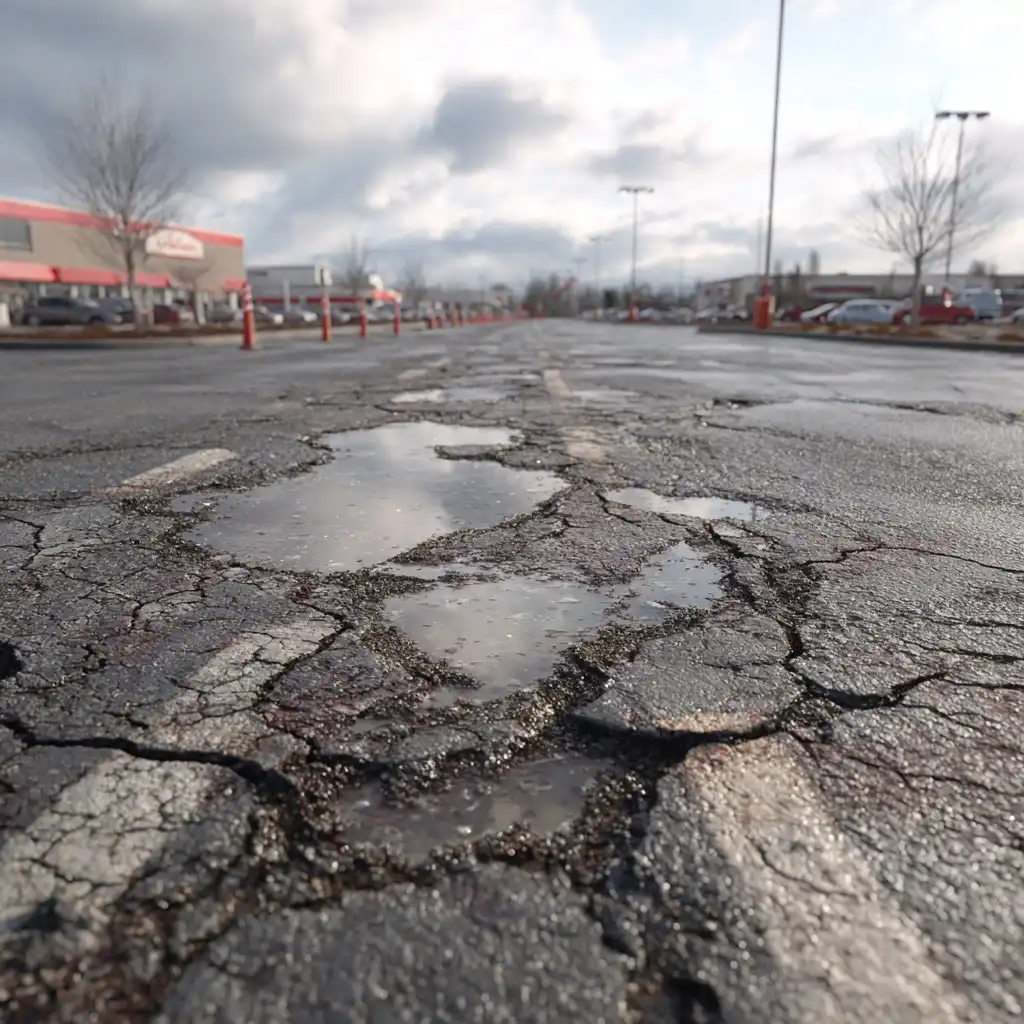
Potholes are one of the most dangerous outcomes of winter weather. They typically form in areas that experience the most stress, like entrances, exits, loading zones, and drive lanes.
As water seeps into cracks and freezes, it expands and breaks apart the pavement. When traffic passes over these weakened areas, the surface collapses, creating potholes. Catching and repairing these early helps maintain safety for drivers and pedestrians, and can stop further structural break down.
Surface Wear or Fading
Winter conditions, combined with plowing and de-icing chemicals, can strip away the protective surface of your asphalt. This often leaves pavement looking faded, dry, or worn.
While this may seem like a cosmetic issue, it’s actually a sign that your pavement is becoming more vulnerable to the elements. A worn surface is more susceptible to water penetration, UV damage, and oxidation. Early maintenance can restore protection and improve both appearance and durability.
Crumbling Edges Along Drive Lanes or Parking Lots
The edges of pavement are especially vulnerable during winter. Without the same structural support as the center, they are more likely to crack, break, and deteriorate under the stress of freezing temperatures and heavy use.
Those crumbling edges can quickly spread inward, reducing the usable surface area of your lot or driveway and creating uneven, unsafe conditions. Addressing edge damage early helps preserve the integrity of the entire pavement structure.
How Timing Affects Your Paving Project
| Timing | What You’ll Notice | Outcome |
|---|---|---|
| Early Spring (Post-Snow Melt) | Cracks, minor potholes, surface wear just becoming visible | Lower repair costs, more scheduling flexibility, preventative maintenance options |
| Late Spring / Early Summer | Worsening cracks, expanding potholes, more noticeable deterioration | Higher costs, limited contractor availability, longer wait times |
| Mid to Late Summer | Significant damage, safety concerns, visible structural issues | More extensive repairs or full replacement likely |
| Fall / Late Season | Severe wear and potential base damage | Weather constraints, rushed timelines, higher overall project cost |
Beat the Spring and Summer Rush
Why rush to get paving estimates right after the snow melts? Why not wait until the weather warms up completely. Because as soon as temperatures rise, paving contractors enter their busiest time of year. Schedules fill up fast as property managers and business owners begin planning repairs, resurfacing, and new installations.
Longer Wait Times for Service
Once peak season begins, it’s common for paving companies to book out weeks or months in advance. Waiting too long to request an estimate can mean your project is delayed far beyond your preferred timeline.
By acting early, you can avoid the backlog and ensure your property gets the attention it needs without unnecessary delays.
Limited Scheduling Options
When contractor schedules are full, flexibility becomes limited. You may have fewer choices when it comes to project timing, which can be especially challenging for businesses that need to minimize disruptions to daily operations.
Scheduling early gives you more control. You can choose dates that work best for your business, coordinate around peak hours, and plan ahead with confidence.
Delays Push Work Into Peak Heat
Putting off your estimate can result in your project being pushed into the hottest part of summer or even into the fall. Extreme heat can impact working conditions and project timelines, while late-season work may run into weather constraints.
By securing your spot early in the spring, you increase the likelihood that your project will be completed under the best conditions, which means better results and a smoother overall process.
Early Action Can Save You Money
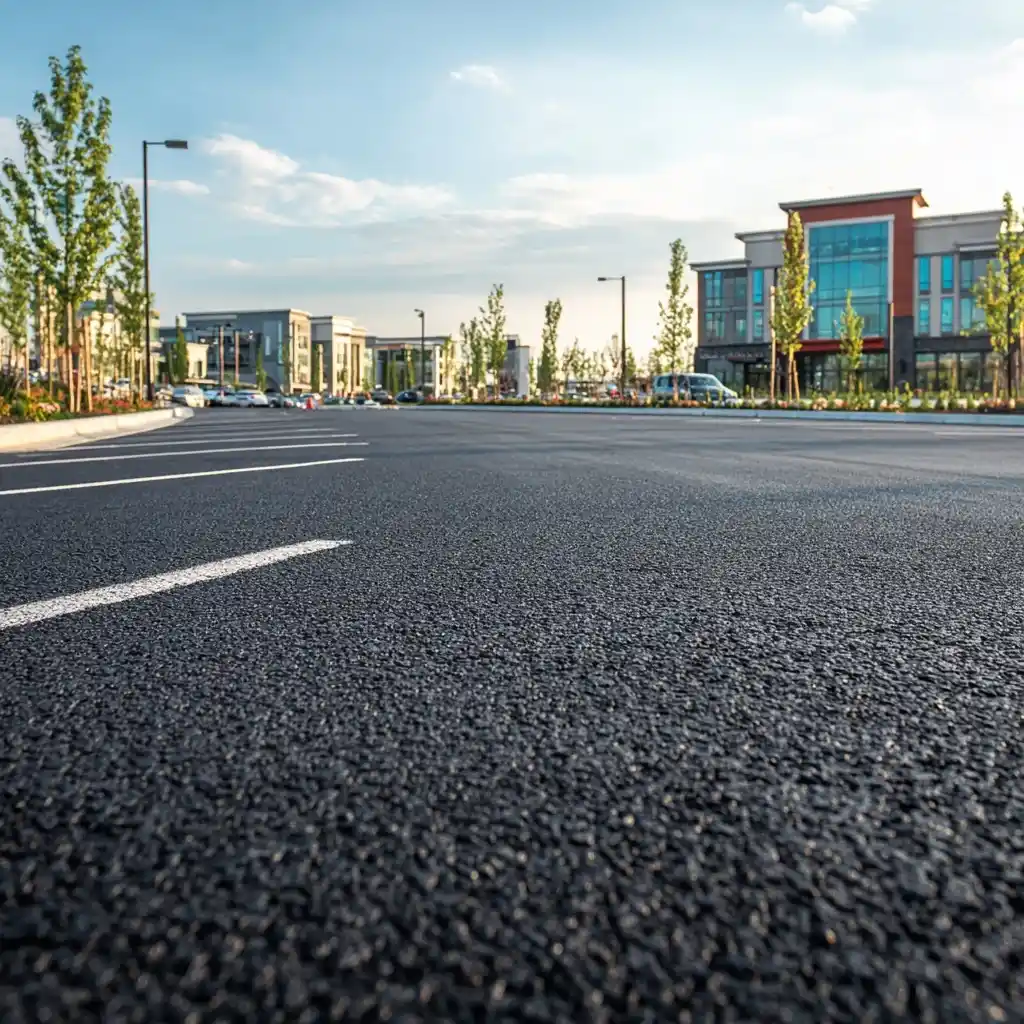
One of the biggest advantages of early spring estimates is cost control.
Small cracks and minor surface damage are relatively inexpensive to repair when caught early. But if water continues to penetrate and weaken the base, those same issues can lead to your pavement needing a complete replacement.
In other words, what could have been a routine maintenance fix in early spring can turn into a major capital expense by late summer.
Being proactive protects your pavement and your budget.
Partnering with Experts Who Understand Timing
At Ruston Paving, we understand how seasonal changes impact pavement performance. Our team works with property managers and business owners to evaluate post-winter damage, recommend the right solutions, and schedule work at the most effective time.
We help you plan strategically so your pavement remains safe, functional, and visually appealing throughout the year.
Act as Soon as the Snow Clears
The best time to get a paving estimate isn’t when the damage becomes impossible to ignore, it’s the moment it becomes visible.
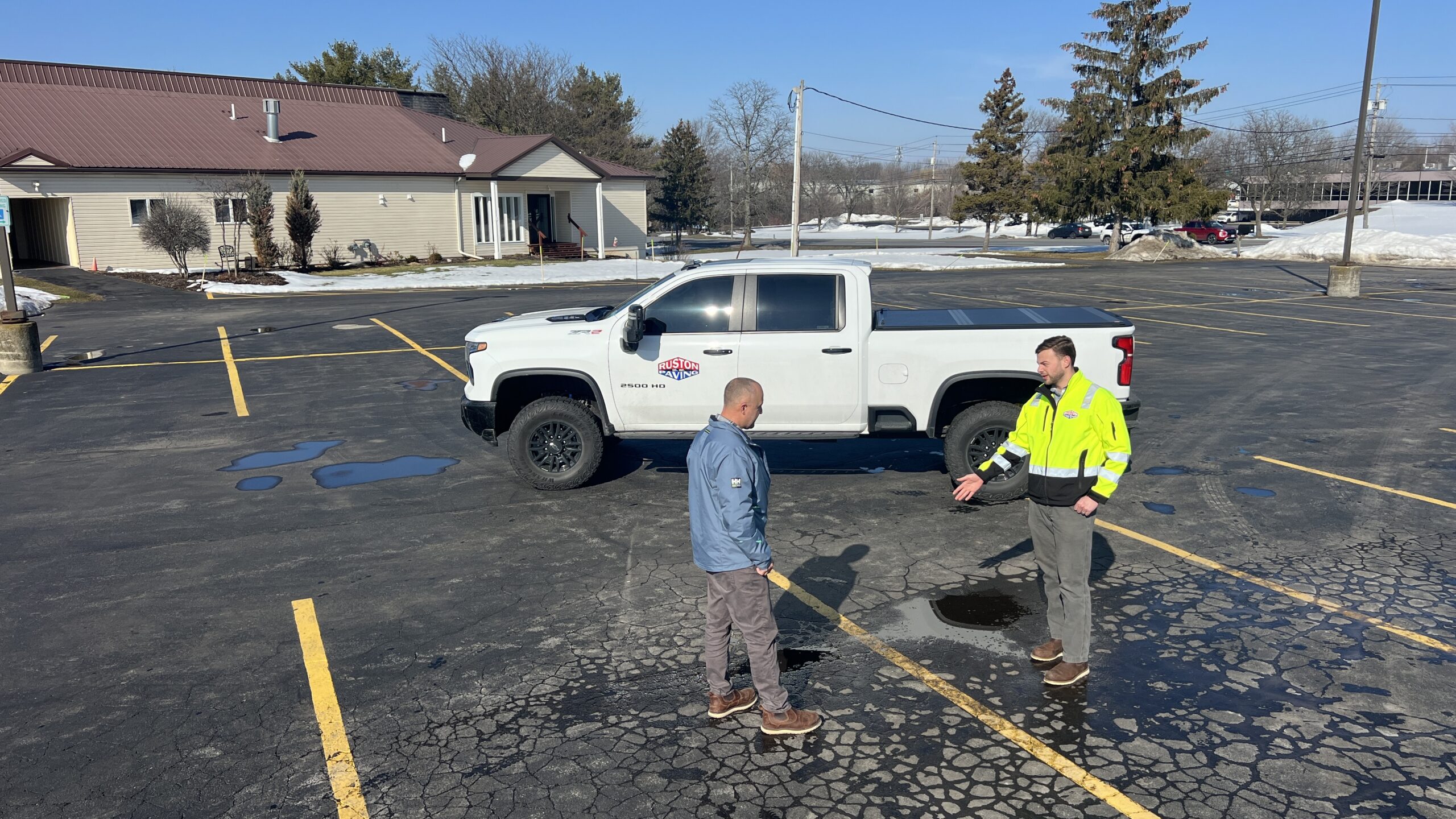
As soon as the snow melts, take a walk around your property and inspect your pavement. Look for early signs of wear and damage, and don’t assume small issues will stay small.
Contact Ruston Paving today to schedule your post-winter paving estimate and secure your spot on our spring calendar. A proactive approach now can save you time, money, and headaches later in the year.