
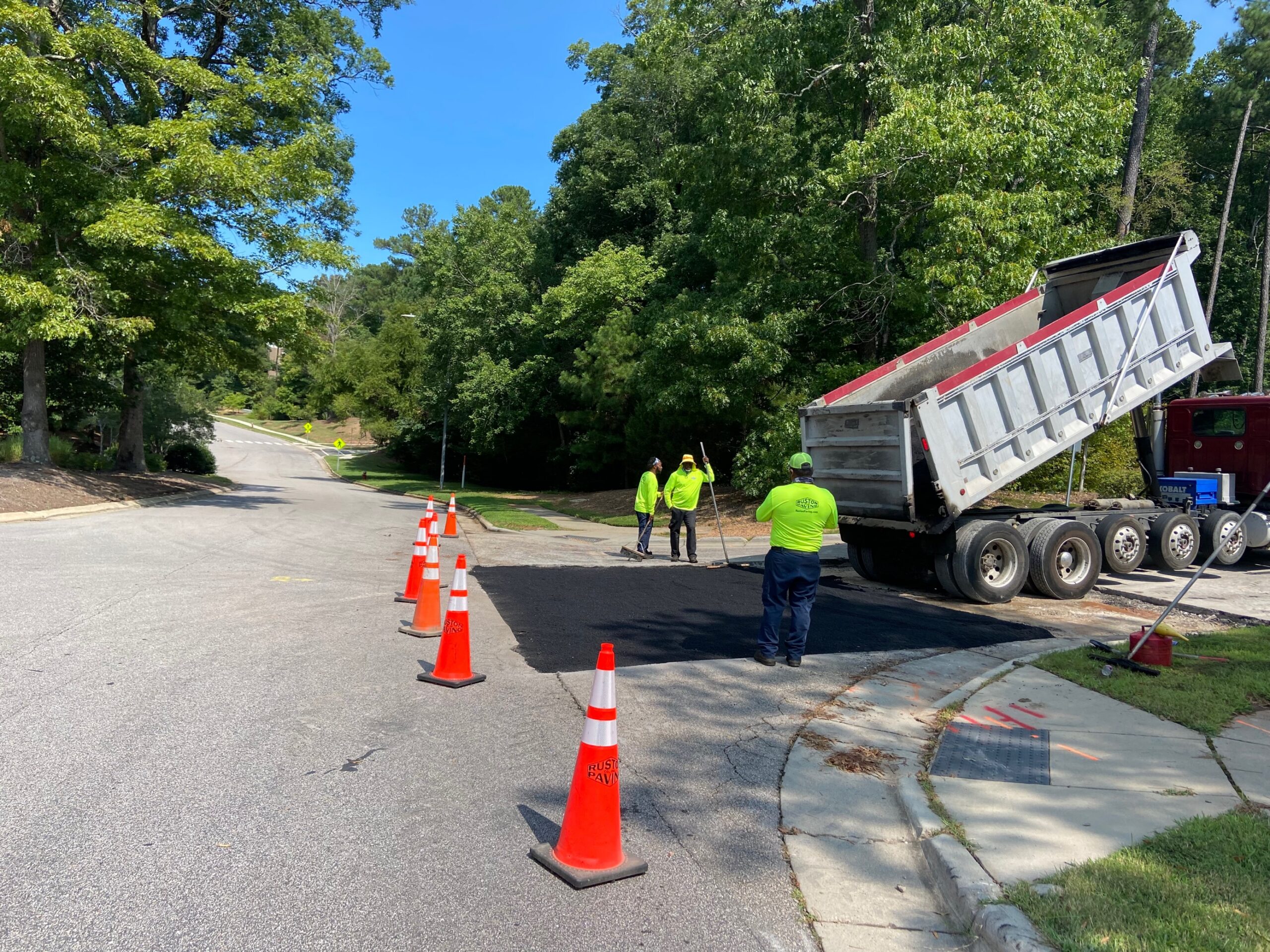
There are two different methods for patching potholes: using hot mix asphalt or using a cold patch. Hot mix asphalt provides a durable, permanent fix for larger potholes in high-traffic areas or warm weather, but requires special equipment and costs more. Cold patch is a cheaper, quicker, and user-friendly option for temporary, small-scale repairs or emergency fixes in any weather, including winter. This article describes each, how they work, and compares both methods.
Table of Contents
Hot Mix Asphalt
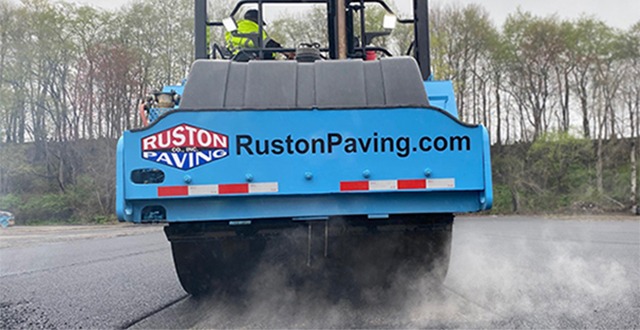
Hot Mix Asphalt (HMA) works by combining hot, heated aggregates (such as crushed stone or gravel) with heated asphalt cement (a binder from crude oil) to create a pliable mixture that is transported to the paving site, spread, and compacted by rollers. The mixture cools and hardens, forming a durable pavement that is ready for traffic once it has cooled sufficiently.
At Ruston Paving, our commercial asphalt paving projects rely on HMA to build roads and parking lots that balance strength, flexibility, and long-term value.
Steps in Using Hot Mix Asphalt
Benefits of HMA
The benefits of hot mix asphalt include:
- Durability: When installed and maintained correctly, HMA can last for many years.
- Skid Resistance: HMA provides good friction, helping vehicles stop effectively, even in wet conditions.
- Smoothness: The mixture absorbs shock, providing a smooth ride and protecting against potholes.
This is why HMA is frequently used for parking lot repair and replacement projects that demand both reliability and long-term performance.
Cold Patch Asphalt
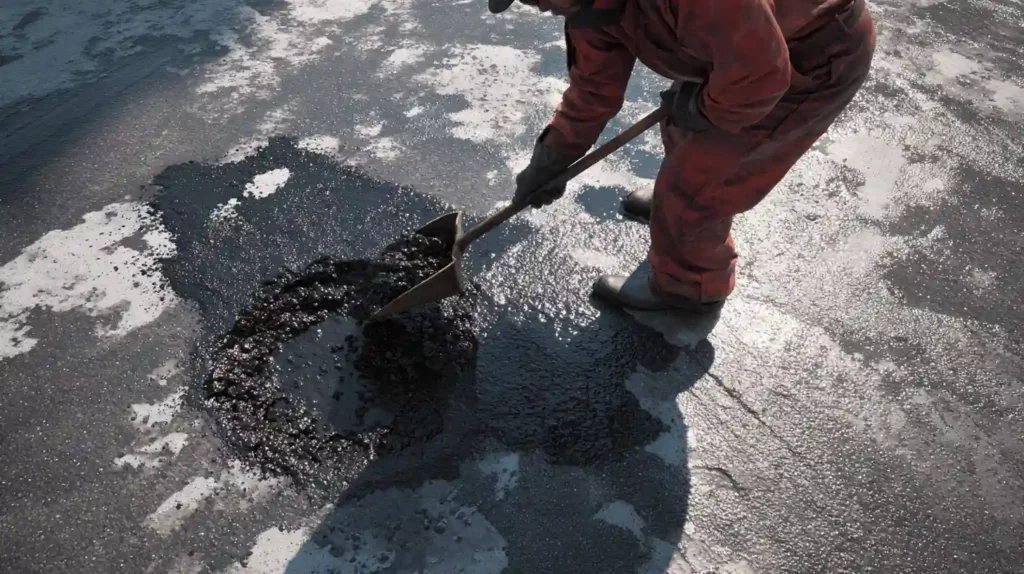
Cold patch asphalt is a ready-to-use, pre-mixed material, temporary pothole repair material made from stone and a cold-tar emulsion. It is designed for immediate application without the need for additional preparation. It’s convenient for quick repairs because it doesn’t require heating or special equipment and can be used in cold, wet, and even freezing temperatures, making it effective for year-round maintenance.
Steps in Using Cold Patch Asphalt
Benefits of Cold Patch Asphalt
The benefits of cold patch asphalt include:
- Convenience and Cost-Effectiveness: The application process is simple and does not require specialized, expensive equipment or extensive training. Many times, a shovel, broom, and hand tamper are sufficient for the job. After being compacted, the repair area can often be reopened to traffic right away. It is affordable for small jobs since it is sold in smaller quantities, such as bags.
- Versatility and Flexibility: Cold patch can be applied in a wider range of weather conditions than hot mix asphalt, including cold and wet conditions. Some formulations are designed to displace water, allowing them to be poured directly into water-filled potholes.
- Safety and Environmental Benefits: Eliminating the need to heat the asphalt reduces energy consumption and removes the risk of burns for workers. The lower energy consumption for production and application results in fewer carbon emissions and harmful fumes.
- A Durable, But Temporary, Fix: When properly applied and compacted, cold patch can provide a durable, semi-permanent repair that lasts until a more extensive or permanent fix can be performed. Additionally, it helps prevent existing cracks and potholes from worsening by sealing out water, which can cause significant damage when it freezes and thaws.
Hot Mix or Cold Mix – The Two Compared
Though both materials serve the common purpose of providing durable, reliable pavement surfaces, hot mix and cold mix asphalt differ significantly in terms of composition, production processes, and application methods.
Performance Preferences
Hot mix asphalt is renowned for its high strength, durability, and resistance to deformation under heavy traffic loads, making it especially suited for use in high-traffic areas and areas subject to particular wear and tear. Additionally, the dense, impermeable nature of HMA pavements offers superior resistance to moisture penetration, prolonging the service life of road surfaces and reducing the risk of premature deterioration.
Conversely, cold mix asphalt exhibits more modest performance attributes compared to HMA, owing to its lower production temperatures and reduced compaction densities. While CMA may not offer the same level of structural strength and durability as HMA, it remains a viable solution for a wide range of applications, including patching potholes, repairing utility cuts, and constructing temporary roads.
Environmental Impacts
Another key distinction between hot mix asphalt and cold mix asphalt lies in their environmental profiles and sustainability implications. CMA production typically involves lower energy requirements and emissions, thereby reducing the environmental footprint of pavement construction activities.
Which To Choose?
Both hot and cold mix asphalt serve as vital components of modern pavement engineering; however, they differ in terms of production processes and performance characteristics. HMA is best suited for high-traffic areas and demanding applications where strength and durability are crucial, while CMA offers greater flexibility and cost-effectiveness in cold weather conditions or remote locations. In understanding the distinctions between these two asphalt variants, engineers and property managers can make informed decisions to optimize the performance, sustainability, and cost-effectiveness of pavement projects.
For property owners or facility managers evaluating which method fits their needs best, Ruston Paving’s asphalt paving services can provide tailored recommendations based on traffic volume, climate, and surface condition. Give us a call or fill out our online contact form to learn more.