

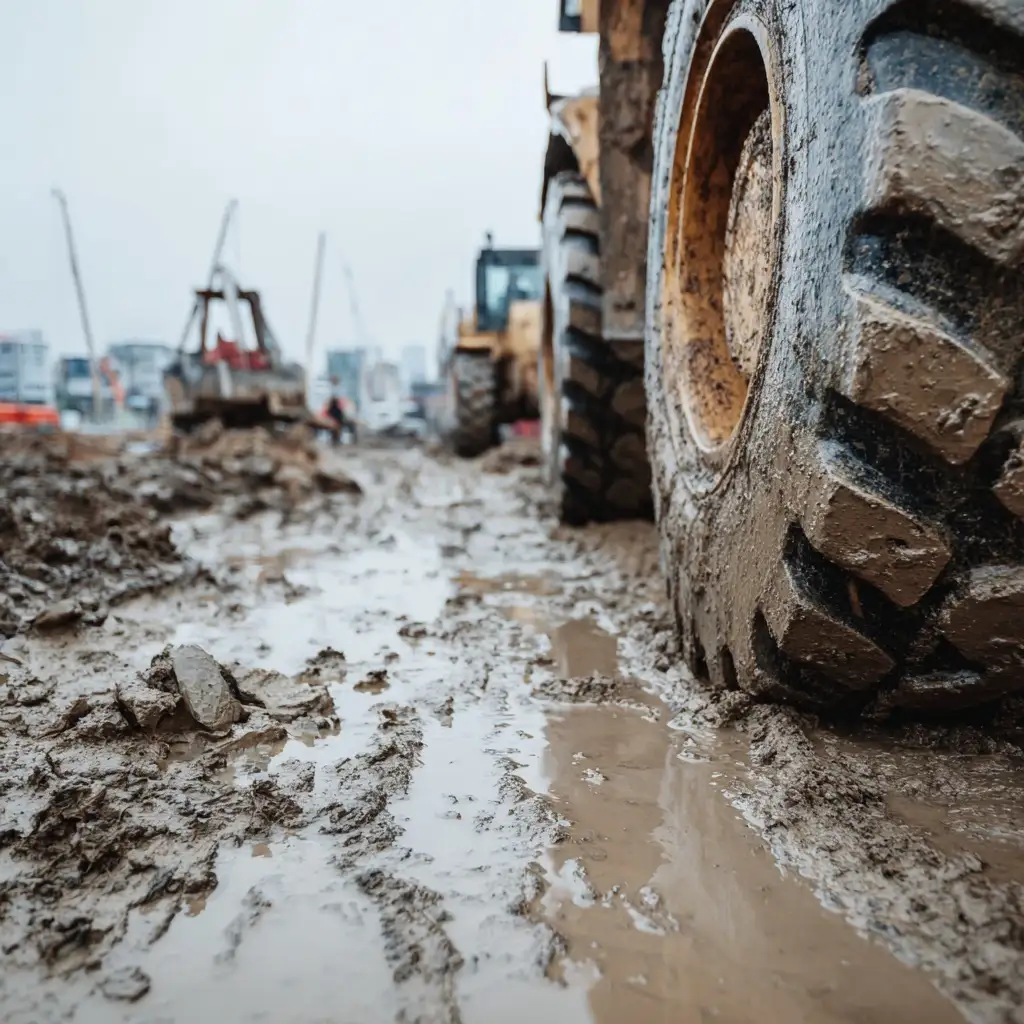
Construction sites often deal with water accumulation and muddy conditions, especially during excavation and early foundation work. Poor drainage can slow progress, damage materials, and create unsafe working conditions.
Managing water on a construction site usually involves a combination of drainage improvements, soil stabilization, and preventative measures that limit future water intrusion. Planning for these conditions early can help keep projects on track and minimize costly delays.
Below are several practical approaches contractors use to control water and stabilize muddy work areas.
Table of Contents
Quick Overview of Construction Site Water Management
| Construction Site Issue | Practical Solution | When It's Used |
|---|---|---|
| Water pooling on the site | Pump out standing water using submersible pumps or vacuums | When water has already accumulated |
| Poor site drainage | Install temporary trenches, swales, or drainage pipes | Early construction stages |
| Saturated or muddy soil | Stabilize soil through compaction, engineered fill, or soil additives | When soil loses load-bearing capacity |
| Ongoing water intrusion | Install erosion control and runoff diversion methods | Throughout the construction process |
1. Improve Drainage
One of the first steps in managing water on a construction site is improving drainage. Proper drainage helps move water away from work areas and reduces the risk of muddy soil conditions that can slow down progress.
Needs to Be Done Early in Construction
Drainage planning is most effective when it is addressed early in the construction process before water begins pooling around active work areas.
Temporary Drainage
Temporary drainage solutions can help redirect water during active construction.
- Dig temporary trenches or swales to redirect water away from work areas.
- Install sump pits with pumps to remove standing water.
- Use perforated drainage pipes (French drains) for ongoing issues.
Permanent Drainage (if site design allows)
In some cases, long-term drainage solutions can be incorporated into the site design.
- Regrade the site to create proper slope (minimum 2% away from structures).
- Install stormwater systems and catch basins.
- Add subsurface drainage systems beneath slabs or foundations.
2. Pump Out Standing Water
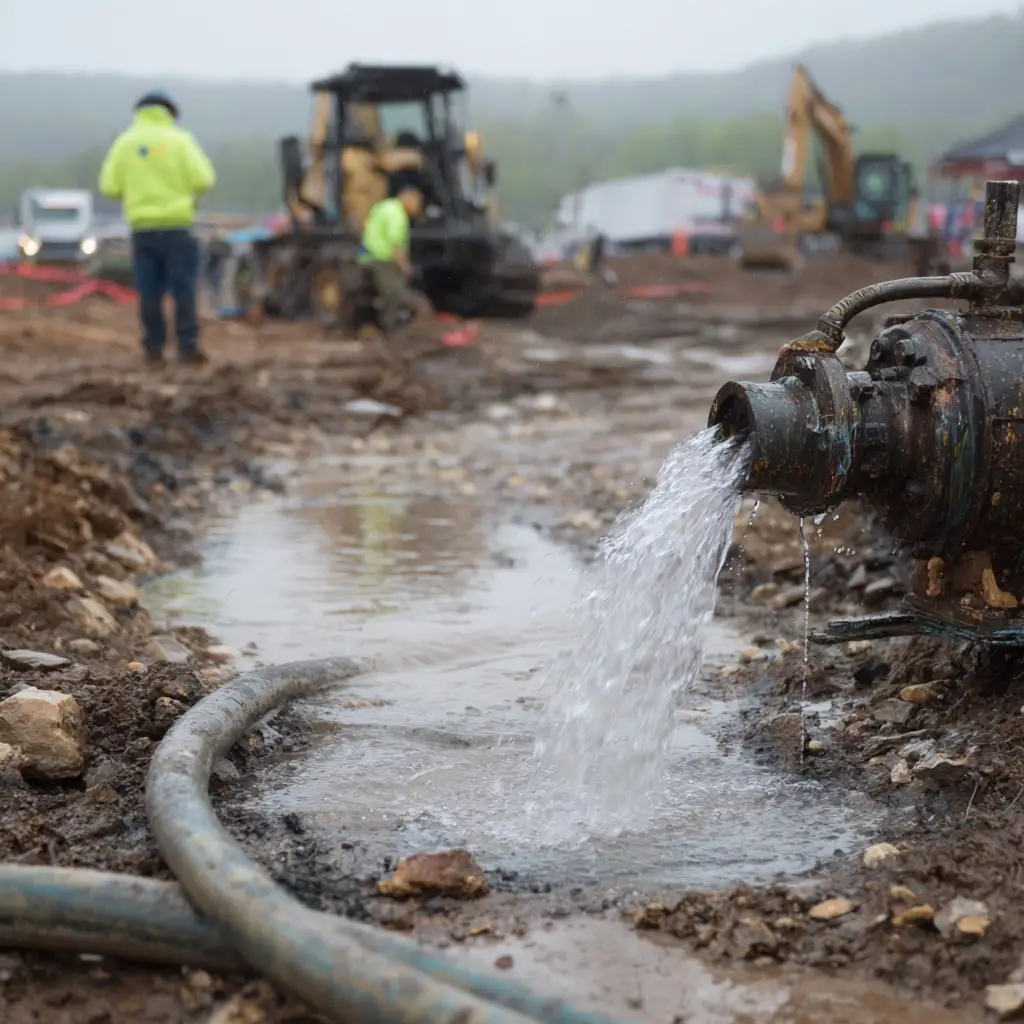
If water is already pooling on the construction site, removing it quickly can help prevent further soil saturation and allow work to continue.
- Use submersible pumps for large pools.
- Use wet/dry vacuums for smaller areas.
- Discharge water away from excavations to prevent it flowing back.
| Tip | Always check local environmental regulations before discharging water offsite. |
3. Stabilize the Soil
Wet soil loses load-bearing capacity and can make construction difficult. Stabilizing the soil helps restore strength and improves site conditions.
Mechanical Methods
- Compact once moisture content is acceptable.
- Remove and replace saturated soil with engineered fill.
Chemical Stabilization
- Add lime or cement to clay-heavy soils to reduce moisture and increase strength.
- Use soil stabilizers or geotextile fabric for reinforcement.
4. Protect the Site from More Water
Preventing additional water from entering the site helps maintain stable conditions and reduces future delays.
- Cover exposed soil with tarps.
- Install erosion-control blankets.
- Use sandbags or berms to divert runoff.
- Schedule earthwork during drier weather when possible.
Planning Site Conditions for Construction Projects
Managing water and muddy soil conditions is an important part of preparing a site for construction. Improving drainage, stabilizing saturated soil, and preventing additional runoff can help maintain safer working conditions and keep projects moving forward. Addressing these issues early also helps create the stable base required for paving, foundations, and other infrastructure.
If you are planning a paving or construction project and need help preparing the site, our team can evaluate existing conditions and recommend practical solutions. Fill out the form below or call us at to learn more.